One of the most important aspects of caring for a loved one who is bedbound is ensuring they are dressed comfortably, given the many daily responsibilities involved. Normal clothes may seem ample but can often cause unnecessary discomfort during dressing, changing, and personal care. Buttons, zippers, and stiff materials, together with tight necklines, might be more of a challenge for patients and caregivers in daily duties.
That’s why choosing the best clothes for bedridden patients is a requirement. Adaptive clothing, designed for this purpose, gives additional comfort, eases care, and helps retain the dignity of persons who are bedridden for lengthy periods of time.
We believe good, purposeful design in garments may improve daily living for patients, caregivers, and families.
Why not ordinary clothes for bedridden patients?
Traditional clothes are made for persons who can stand, walk, and move around at will. Traditional clothing might be challenging to wear for bedridden people with restricted mobility.
Common problems are:
- Difficulty in raising arms when dressing
- Pain from Unwanted Movement
- Restrictive clothing that puts pressure on the body; buttons and zippers are difficult to use, and more time and effort are required from caretakers
- Skin irritation from coarse, non-breathable fabrics
Adaptive clothing addresses these issues with functional designs that focus on comfort and accessibility.
What Is Adaptive Clothing For Bedridden Patients?
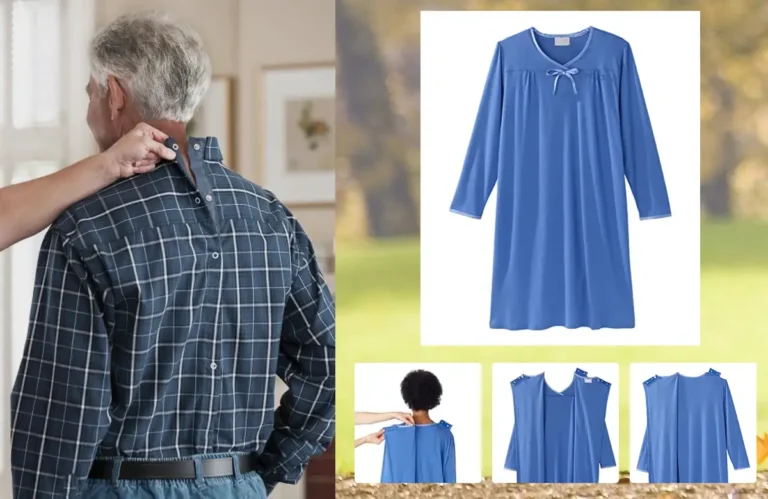
Adaptive clothing is clothing that is specifically designed for limited mobility, chronic diseases, disabilities, and long-term bed rest. Easy-access openings and comfortable fabrics make dressing simpler and lessen physical strain.
Some popular aspects of adaptive clothes include:
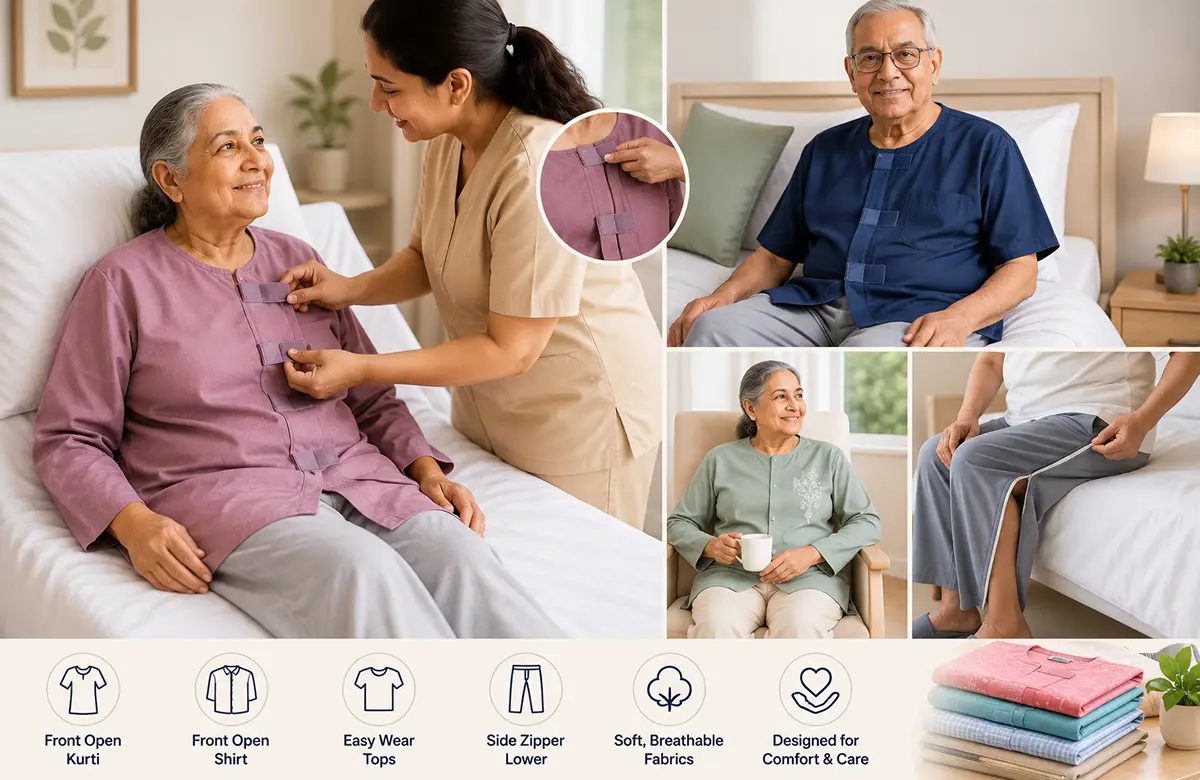
- Front opening designs
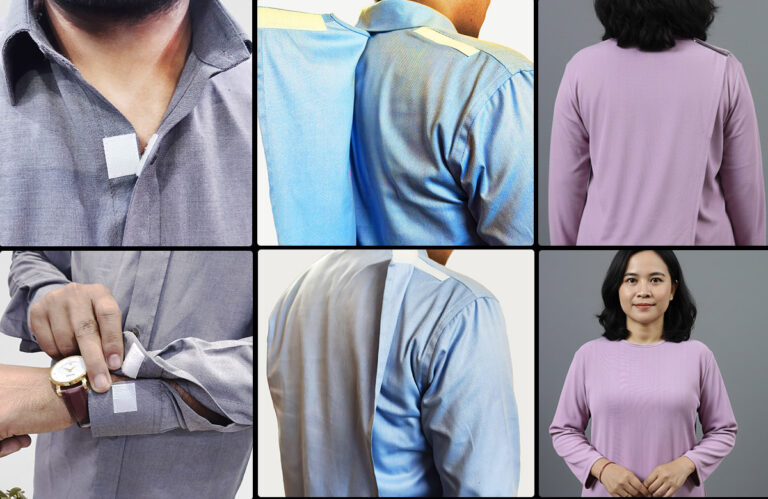
- Velcro, not buttons
- Clothes without backs
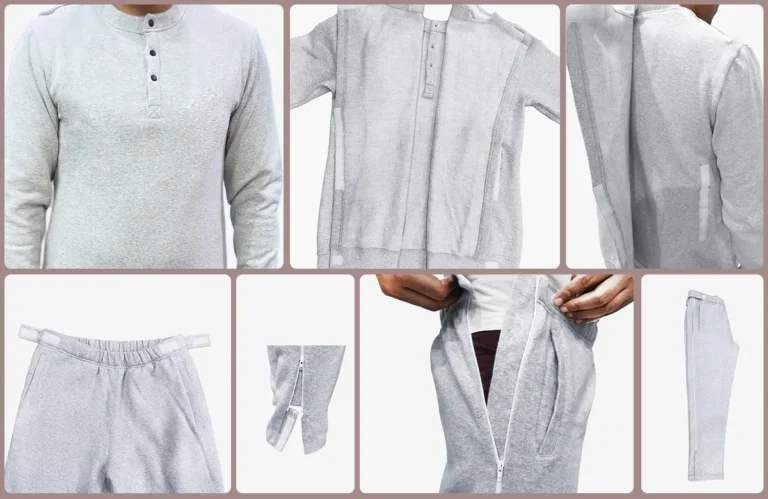
- Pants with side openings
- Elastic waistbands
- Easy fit / Relaxed fit
- Breathable, soft fabrics
Respect is not sacrificed for the simplicity and comfort of dressing, with thoughtful touches.
What to Look for in the Best Clothes for Bedridden Patients
1. Front-Opening Clothes
Overhead clothing: Front-open shirts and kurtas are easy to wear. They limit arm movement and help with assisted dressing.
2. Hook and Loop Fasteners
Velcro fastenings mean no more faffing around with tiny buttons and zips. They are especially helpful for people with arthritis, weakness, or limited hand motion.
3. Natural, Breathable Fabrics
Patients spend lots of hours in bed; therefore, breathable cotton-blend textiles are essential. The soft fabrics prevent pain, enable air to circulate, and keep the wearer comfortable throughout the day.
4. Comfortable and Relaxed Fit:
Clothes should never be a constraint. The flexible fit allows freedom of movement and can be used to accommodate medical equipment, dressings, or bandages if necessary.
5. Maintenance Material Easy
The fabrics are machine washable and durable, making laundry easy for caretakers, and the outfits are good for everyday use.
Advantages of Adaptive Clothing for Bedridden Patients
- Greater Comfort: Soft fabrics and smart designs help to relieve pressure, irritation, and pain when lying in bed for long durations
- Easier Caregiving: Adaptive clothing makes caring easier. It greatly simplifies the challenge of dressing, changing, and personal hygiene.
- Maintained dignity: People need garments that look like normal clothes, not hospital attire. Adaptive clothing helps you look and feel your best.
- Decreased physical stress: Easy closures and front openings prevent superfluous motion, which is useful for the patient and caregiver.
- Better Living Every Day: Comfortable clothing creates a better everyday experience at home, as well as in a rehabilitation center or nursing care.
Who needs adaptable clothes?
Adaptive clothing is a great option for many people, including:
- Bedridden patients
- Elderly people
- Stroke survival
- Arthritis sufferers
- Users of Wheelchairs
- People with Parkinson’s
- Post-operative recovery patients
- Persons with limited mobility
- long-term care patients
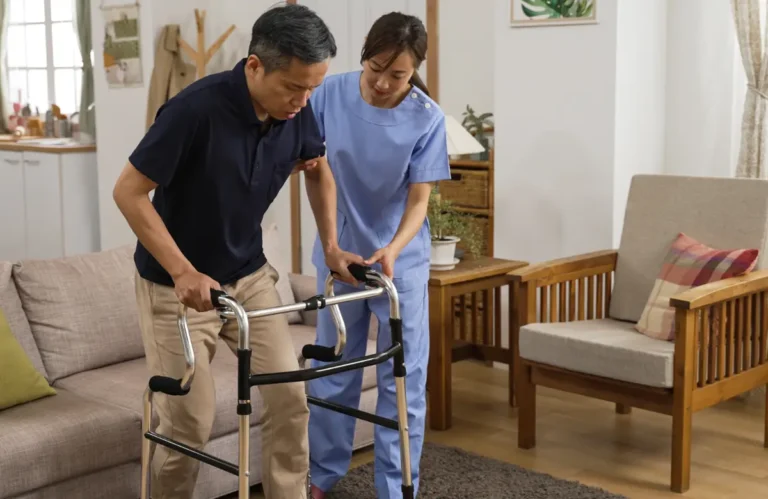
It also contributes enormously to family members, professional caregivers, and nursing staff.
Choosing Clothes for the Bedridden
Practical points to consider while choosing clothes:
- Easy front openings for assisted dressing
- Velcro strap closure
- Cotton fabrics, soft
- Roomier, comfortable fit
- Material that is kind to skin
- Machine wash
- Quality stitching for everyday use
Such features make daily care easier and generally offer more comfort.
Wearly Adaptive Clothing: Our Unique Selling Point
Wearly makes clothes designed to solve real-life caring problems. Our clothes are meant to balance comfort, function, and everyday style.
Our collection includes:
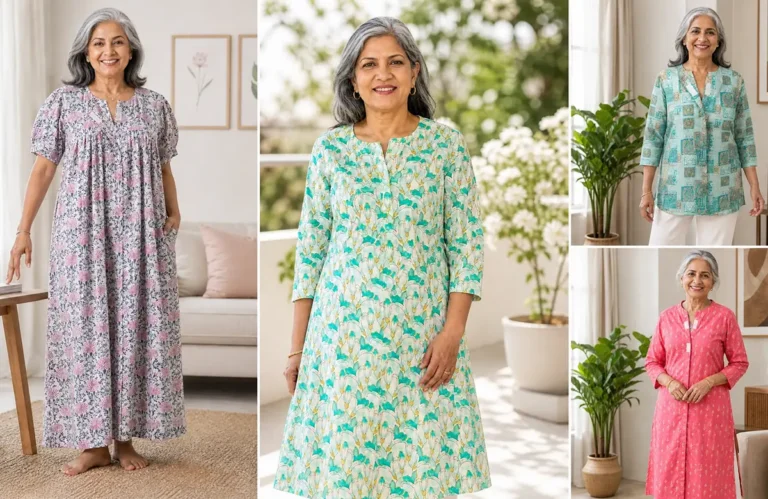
- Kurtis for Women, Open Front Velcro Closure
- Men’s Adaptive Polo Shirts
- Open Back Patient Garments
- Easy-Fit Trousers
- Adaptive Clothing for Seniors
- Post-surgical Recovery Clothing
- Arthritis-Friendly Apparel
- Wheelchair Users’ Clothing
Every item is carefully designed to make dressing easier yet still seem like conventional clothes.
Tips for Caregivers
Small clothing choices can make a big difference in patient care:
- Choose textiles that breathe for all-day comfort.
- Avoid tight collars, cuffs, or waistbands.
- Keep a few flexible clothes on hand to make it easier to change.
- Reverse. Wash as per recommendation to retain the suppleness.
- Velcro closures can wear down with time.
Comfortable clothing can help to improve care and the general quality of life for the patient.
Summary
Selecting the correct clothes for immobile people is more than just picking comfortable fabrics. The right adaptive clothing makes getting dressed easier, helps caregivers, preserves delicate skin, and supports the dignity of those with limited mobility.
Whether it’s an aged parent, a loved one recovering from surgery, or someone in need of long-term bed care, multi-use apparel offers sensible solutions to ease everyday responsibilities.
Wearly is dedicated to creating adapted clothing that is comfortable, easy to wear, and intentionally created. “Because all patients should have clothes that are comfortable, familiar, and improve the quality of life.