For wheelchair users, getting dressed is much more than just picking an outfit. Traditional clothing is usually tailored for those who stand, walk, bend, and move freely. These designs can be uncomfortable when the majority of the day is spent sitting or difficult to dress, or add extra work for caregivers.
The good news is that with careful consideration of what you wear, you can make getting dressed each day a more comfortable and convenient experience. Whether it’s finding the right fit or looking for features that make it easy to use, small changes can make a big difference.
Five common clothing problems wheelchair users face and practical solutions to consider.
1. When You Sit for Long Periods, Clothes Become Uncomfortable
One of the most common problems is discomfort caused by clothing designed primarily for standing.
Tight waistbands when you sit, fabric bunching around the hips or knees, seams digging into the body. Loose fabrics can also bunch up under the wearer and make clothing uncomfortable to sit in for long periods of time.
Practical solution:
Seek out clothing designed for seated comfort. Soft, flexible fabrics and comfortable waistbands can help alleviate unnecessary pressure. Loose clothing is better around the waist, hips, thighs, and knees. For wheelchair users, who sit for many hours, how clothes fit when sitting often is more important than how they look when standing up.
2. Difficulty getting dressed and undressed
Dressing can be a challenge for people with limited mobility, poor balance, weakness, or difficulty standing. Pulling trousers over hips or lifting the body to adjust clothing can be a struggle. A person who cannot stand on his or her own may also need help with dressing from a caregiver.
Practical solution:
Look for adaptive clothing that has easy-access features.
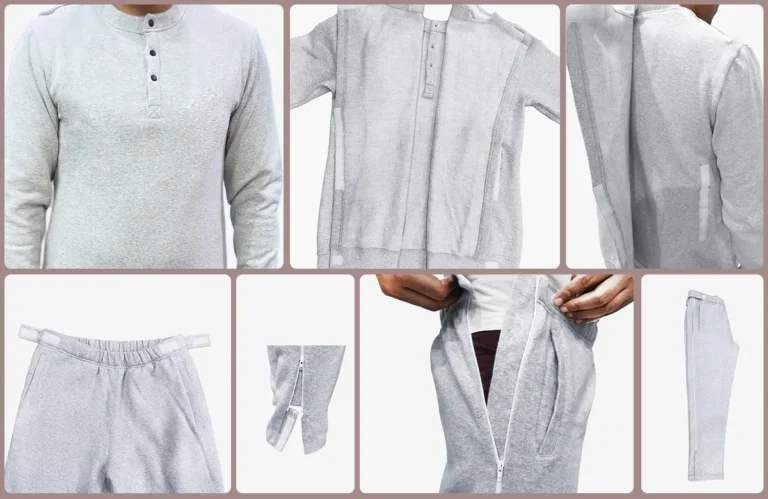
Front-opening tops, open-back styles, side-zip pants, and other adaptive closures can help minimize the amount of movement needed to get dressed. These features enable caregivers to dress or change someone without having to stand up. The point is not just to make clothes easier to get on. The point is to reduce unnecessary movement and make the process of dressing easier for everyone involved.
3. It’s Difficult to Adjust Pants While Sitting
Traditional trousers can present a few problems for wheelchair users. Without standing, it can be difficult to pull pants on or off, and the waistband can shift and fabric bunch up behind the knees. This can get especially inconvenient when changing clothes or needing help.
Practical solution:
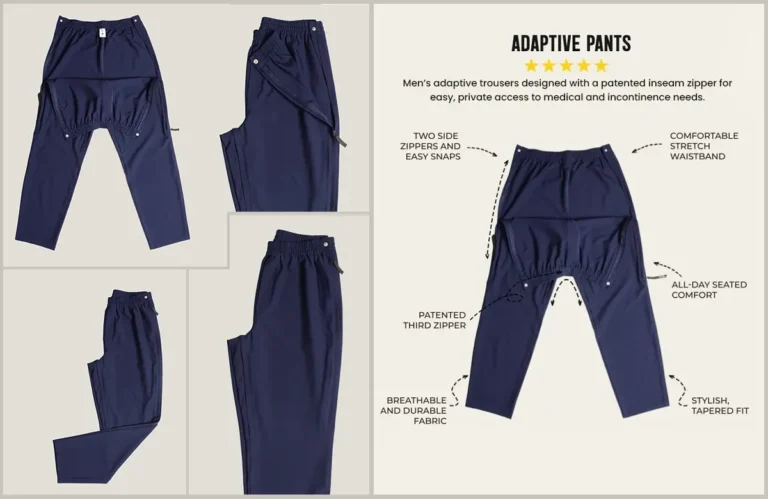
Seek wheelchair-friendly or easy-access pants with elastic waistbands and practical closures. Side-zip or adjustable pants may allow for easier access and less need to lift or reposition multiple times. A comfortable rise and enough space around the hips and thighs can also make sitting more comfortable.
When looking for pants, don’t think of the fit when standing only. Check how the garment is likely to feel and function when in a seated position.
4. Buttons, Little Fasteners, and Complicated Closures
Small buttons, hooks, and other traditional fasteners can be frustrating for people with limited hand strength or reduced dexterity or who have trouble with fine motor movements. Even if the wearer is physically able to wear the garment, fastening can take a lot of time or help.
Practical solution:
Choose clothes with easier fasteners such as Velcro, magnetic closures, elastic waistbands, or zippers that are easy to reach, depending on the person’s needs and abilities.
E.g., a Velcro front-open top may be a lot easier to manage than a traditional button-down shirt. The choice of the right closure can make a real difference, not only in saving time but also in allowing some individuals to participate more independently in the dressing process.
5. Caregivers May Have Difficulty Dressing and Changing Clothes. Caregivers are affected by clothing, too.
For a wheelchair user, dressing may require bending, repositioning, lifting, or readjusting clothing with assistance. Complex garments can make demanding care routines even more time-consuming.
Practical solution:
Go for caregiver-friendly adaptive clothing. Find clothing that offers easy access to areas that need frequent adjustment or change. Open-back tops, front-opening garments, and easy-access pants can aid dressing while reducing unnecessary handling. Caregivers should also look for clothing that is easy to wash and care for. Soft, durable, machine-washable fabrics can be especially practical for everyday use.
Selecting Appropriate Attire for Wheelchair Users
No one style of clothing works for everyone. The best option will depend on the person’s mobility, sitting position, amount of help, personal preferences, and daily routine.
When buying clothing, ask yourself these questions:
- Can the person dress themselves, or do they need assistance with dressing?
- Do they sit almost all day?
- Are they struggling with buttons or small closures?
- Is it difficult or impossible to stand up while dressing?
- Do you change clothes frequently?
- Does the individual complain about tight waistbands or seams?
- How easy is the garment to wash and care for?
Asking yourself these questions can help you select clothes based on function and comfort, not just looks.
Adaptive Clothing Makes Everyday Dressing Easier
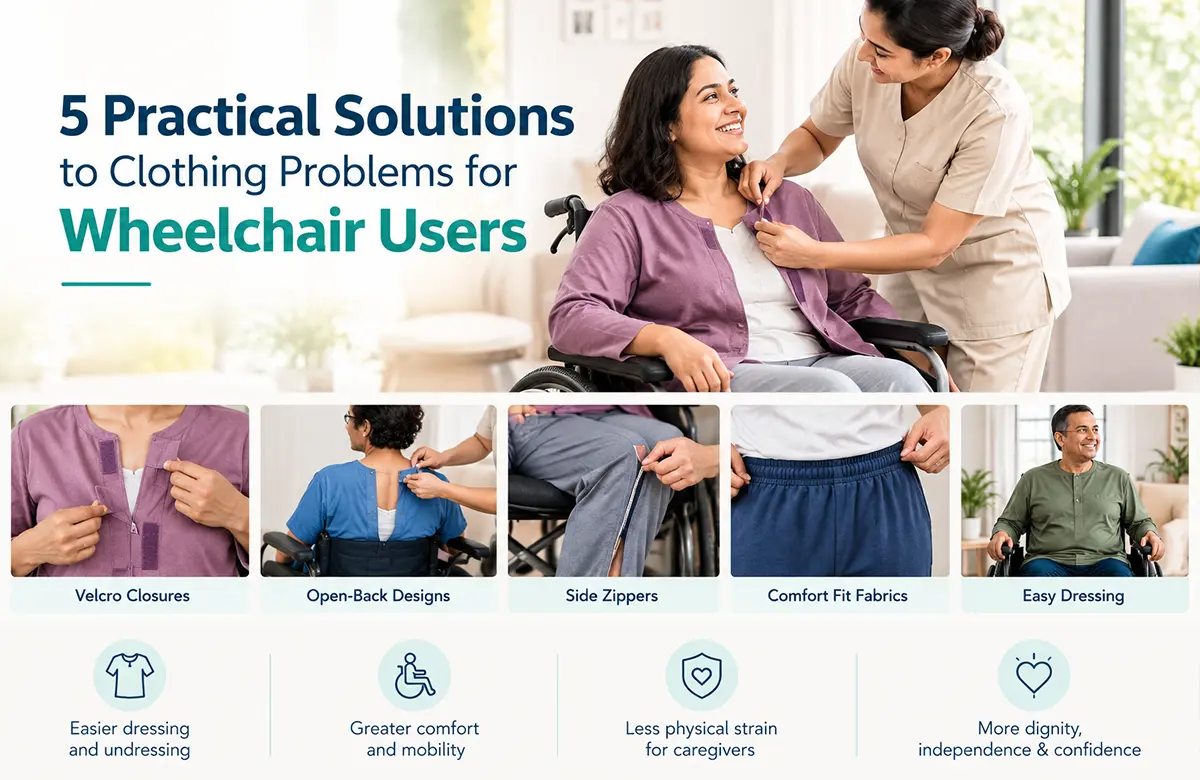
Adaptive clothing is clothing that is easy to put on and take off, designed with the needs of people who may find conventional clothing difficult to use. Features such as front openings, Velcro closures, open-back designs, elastic waistbands, and side zippers can make dressing and changing easier. “We believe that clothing should work for the wearer, not against them.“
Our collection of adaptive clothing is designed for seniors, wheelchair users, patients, those with limited mobility, and caregivers looking for practical dressing solutions. Our goal is to blend comfort, convenience, function, and dignity into easy-access pants, adaptive shirts, and other comfortable everyday apparel.
Conclusion
Having a disability doesn’t mean you have to sacrifice comfort or your own style. Comfortable clothing can make everyday routines easier, especially when clothes are designed with comfort in seating, accessibility, and assisted dressing.
Instead of asking, “Does this clothing look good?” Try to ask, “Is it comfortable when you are sitting? Are they easy to get on? Is it easy to adjust to? Will it make dressing easier for the wearer and the caregiver?
These simple questions can help you choose clothes that are not only comfortable but also truly practical for your daily life.
Frequently Asked Questions (FAQs)
Q1. Is adaptive clothing suitable for wheelchair users?
Yes. Adaptive clothing can make dressing and changing easier for people with limited mobility.
Q2. What are common clothing problems for wheelchair users?
Wheelchair users may feel discomfort while sitting, difficulty dressing, tight waistbands, and complicated fasteners are common challenges.
Q3. What type of clothing is best for wheelchair users?
Comfortable, flexible, easy-access clothing with features like elastic waistbands, Velcro closures, and zippers can be helpful.
Q4. Are open-back clothes helpful for wheelchair users?
Yes, open-back designs can simplify assisted dressing for people who have difficulty standing or moving their arms.
Q5. What should I consider when buying wheelchair clothing?
Focus on seated comfort, easy access, fit, fabric, closures, and ease of changing.
Shop adaptive and easy-access clothing for real-life needs at Wearly.in.