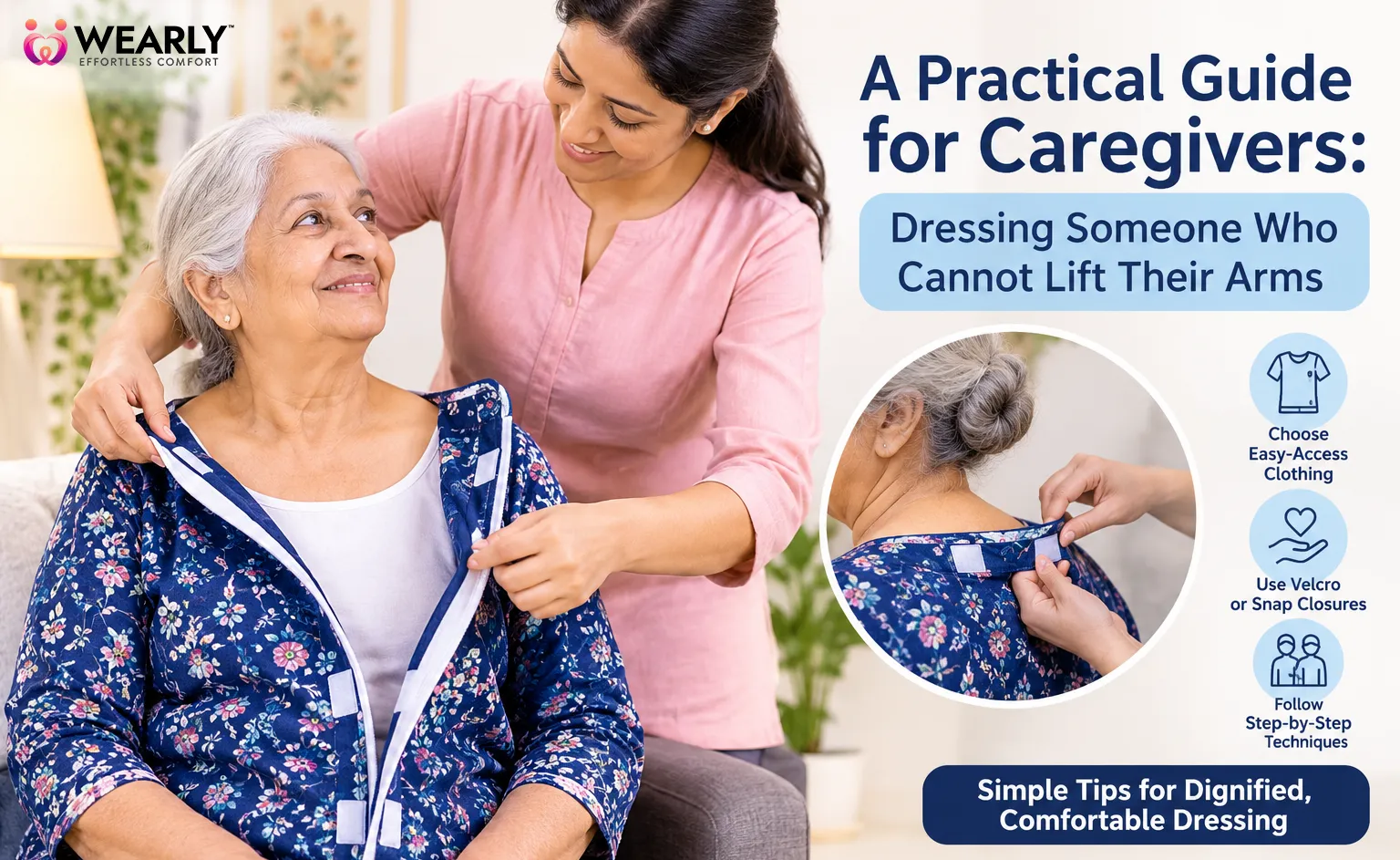
People usually dress without thought. This simple daily action might be difficult for someone with shoulder discomfort, surgery, injury, weakness, or limited mobility.
Family members and caregivers must be patient, careful, and strategic when dressing someone with restricted arm movement. Pulling a shirt over the head, putting on sleeves, or changing clothes might be uncomfortable if the individual cannot move their arms.
Good dressing practices and well-designed clothing can make the procedure easier, more pleasant, and less stressful for both the individual and the caregiver.
Why Can’t Some People Lift Their Arms?
There are many causes of limited arm movement. Even simple movements like raising an arm, bending an elbow, or reaching behind the back may be challenging depending on the person’s health.
Some common situations:
- Shoulder surgery or injury: Medical advice may limit movement during healing.
- Some stroke survivors have side weakness or loss of control.
- Arthritis: Joint discomfort and stiffness make arm-raising difficult.
- Parkinson’s: Muscle rigidity and mobility issues may impede clothing.
- Neurological problems can compromise arm coordination and control.
- Age-related weakness: Reduced strength and flexibility might make dressing harder.
Understanding the cause of restricted movement is crucial for tailoring dressing approaches to individual comfort and medical recommendations.
7 Practical Tips for Dressing Someone with Limited Arm Movement
Gentle, slow, and polite dressing help is needed. Below are practical steps for caregivers:
1. Avoid pullovers and choose front-open clothing.
Traditional shirts and tops require two arms to pull over the head. Someone with limited shoulder movement may struggle.
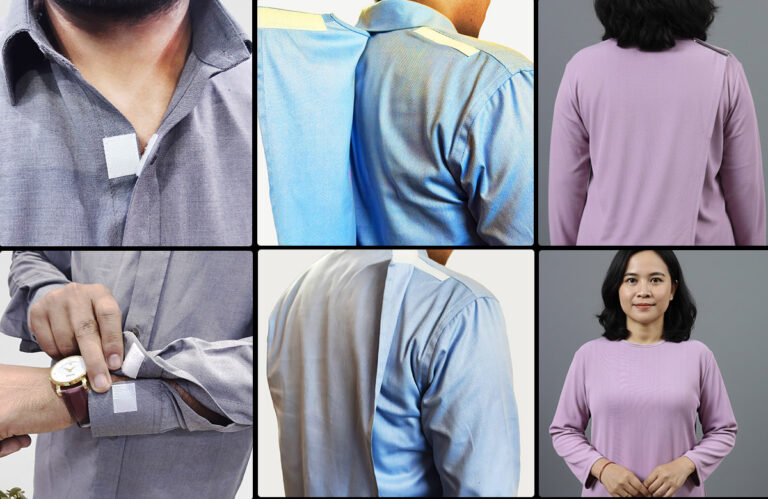
Front-opening clothes are easier. Choose front-opening clothes that may be donned without lifting both arms. Shirts, kurtis, and tops featuring Velcro closures or easy-access fasteners simplify dressing.
2 Dress the Least Mobile Arm First
Starting with the less mobile arm, carefully guide the sleeve over it.
- A good broad strategy:
- Support the arm comfortably.
- Gather the sleeve for easier pulling over the hand.
- Gently slide the sleeve over the affected arm.
- Then dress the opposite arm.
- Adjust the garment carefully over the shoulders and body.
Observe any mobility limits recommended by your doctor or physiotherapist. The order of recommended operations may vary for certain injuries or surgeries.
3. Avoid Tight Sleeves and Narrow Necks
Dressing clothes with narrow sleeves, cuffs, or neck holes is tricky.
Instead, seek:
- Wide sleeves.
- Relaxed shoulder fit.
- Soft, stretchy textiles.
- Comfortable necklines.
- Simple front closures.
The characteristics enable caregivers to clothe someone without excessive pulling and adjustments.
4. Replace Small Buttons with Velcro
- People with weak hands or limited arm movement may struggle with small buttons and closures.
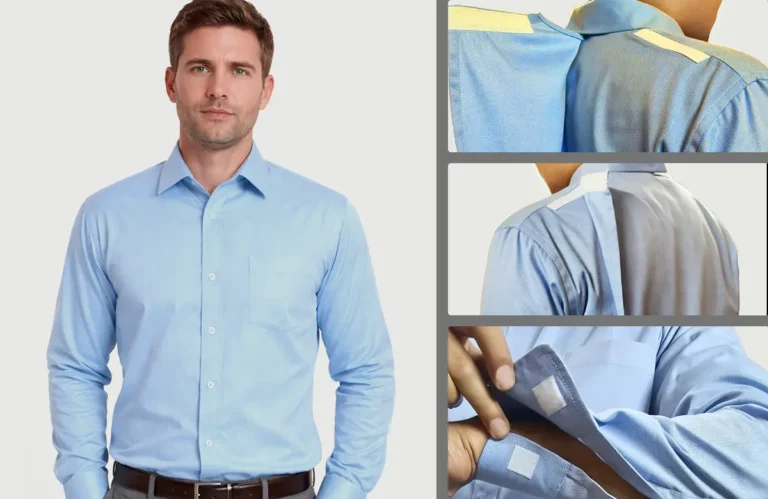
- Velcro closures are convenient since they can be opened and closed with one hand.
- For patients and the elderly requiring dressing assistance, Velcro closures on front-open clothes simplify daily changes.
5. Consider Open-Back Clothing for Bedridden People
- Traditional clothing may be difficult to put on for those who spend much of their time in bed or have trouble sitting up.
- Caregiver-friendly open-back adapted clothing makes dressing and changing easier.
- The garment can be secured around the body without the need for lifting arms or pulling garments over the head, depending on the design.
6. Dress with Privacy and Dignity
Dressing assistance goes beyond changing clothes. Respecting personal comfort and independence is also important.
Caregivers should:
- Before starting, explain each step.
- Cover the person as much as possible.
- Participants should participate where they feel comfortable.
- Avoid hurrying to dress.
- Respect their dress and style preferences.
Small gestures can significantly impact someone’s comfort and respect.
7. Choose Comfortable Fabrics for Daily Wear
- Fabric matters as much as garment design.
- Choose soft, breathable, lightweight, skin-friendly materials. Cotton and cotton mixes are practical for everyday apparel in India’s fluctuating weather.
- Choose textiles that are easy to wash and can withstand many wardrobe changes.
How Adaptive Clothing Simplifies Dressing
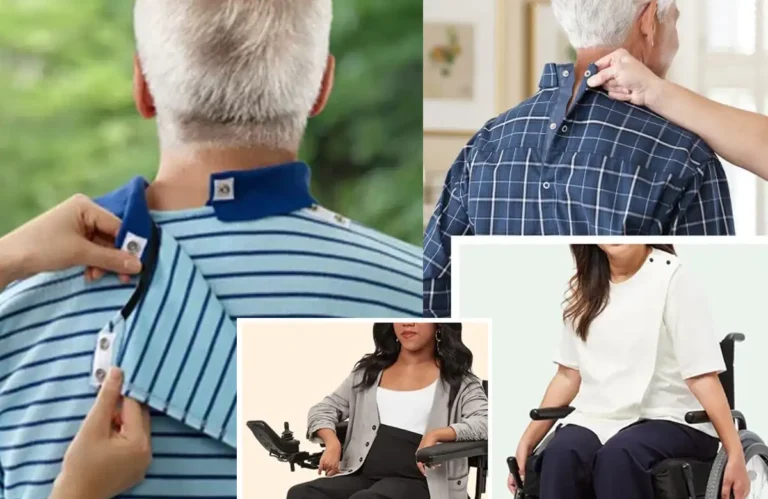
Adaptive clothing is made for people who have trouble wearing regular clothes. Adaptive clothing prioritizes comfort, accessibility, and usability.
Some useful qualities are
- Front-open designs: People with limited shoulder movement can wear these without pulling garments over their heads.
- In some clothing, Velcro fasteners replace buttons, making fastening and unfastening easier.
- Open-back designs: These allow caretakers to change clothes without much activity, especially for bedridden or assisted-dressing patients.
- Side-zip openings: Wheelchair users and those who have trouble standing can put on or take off trousers more easily.
- Soft, breathable textiles: Comfortable fabrics make daily wear more pleasant, especially when clothing is regularly changed.
These elements make adaptive clothing useful for elders, surgical patients, and those with mobility issues.
What Wearly Does for Easy Dressing
Wearly knows that dressing can be challenging for people with limited mobility or arm lifts. We make comfortable, functional, and thoughtful adaptive clothes for the elderly, patients, wheelchair users, and others who need dressing assistance.
Wearly makes functional apparel for everyday purposes, including:
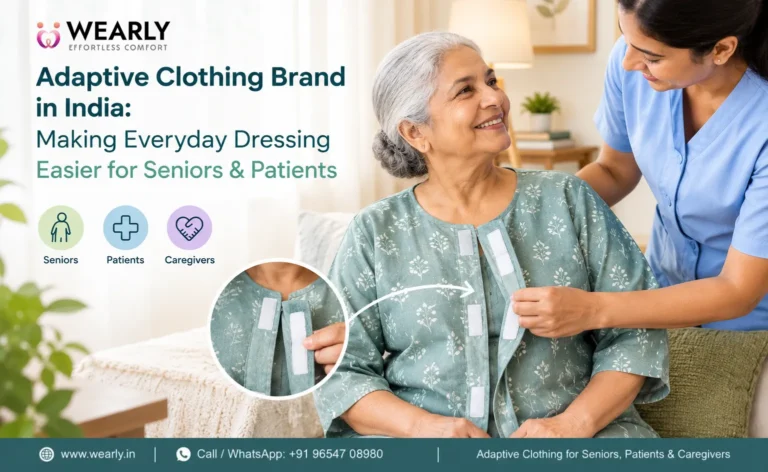
- Velcro-closed front-open kurtis for easy dressing.
- Open-back adaptable clothes for caregiver dressing.
- Adaptive shirts simplify daily wear.
- Easy-access pants with zippers.
- Comfortable senior and mobility-challenged clothing.
We want to simplify daily dressing while preserving comfort, elegance, and dignity.
FAQs
1) What clothes are suitable for someone who can’t lift their arms?
Front-open shirts, Velcro-closure kurtis, and adaptable clothes with broad openings are handy. The need to raise arms or pull garments over the head is reduced.
2) How do you dress someone with limited shoulder movement?
Choose loose, front-open clothes. Keep the injured arm supported, guide it into the sleeve without force, and adhere to any medical restrictions from the treating expert.
3) Are front-open garments better for patients?
Front-open clothing simplifies dressing and changing for those with limited arm movement, preventing garments from being pulled over the head.
4) What clothes are good after shoulder surgery?
Loose-fitting front-open shirts, tops, and clothes with easy fasteners may be easier. Ensure clothing and dressing practices adhere to surgeon’s movement restrictions and recuperation guidelines.